
How to Make a Minimalist Room Feel Warm, Not Empty
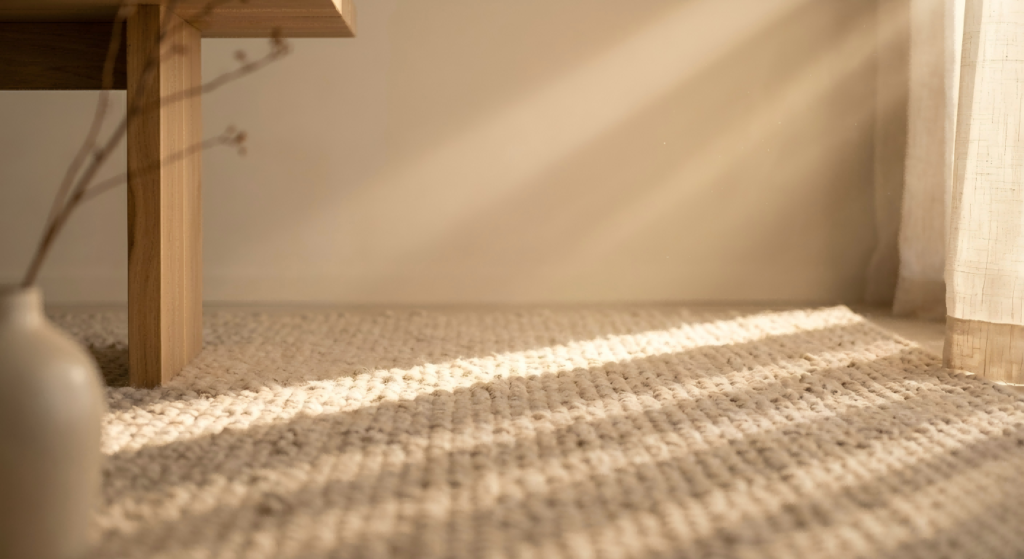
You can clear every surface, keep the walls bare, and still walk into a room that feels cold. A minimalist room can feel calm, or it can feel like a waiting room. In my experience of looking at rooms like this, the difference usually isn’t how much is in them. It’s what the few things are made of, how they’re placed, and what kind of light falls on them.
That’s why I use a simple Warm Check with three questions: What does the Texture feel like? Is the empty Space intentional? Is the Light warm? If you’ve read my guide to making a small room feel bigger, the Eye Test is for rooms that feel cramped. This one is for rooms that feel cold.
1. Texture: Give the Eye Something to Rest On
If every surface in a room is smooth (painted walls, a flat sofa, a glossy table), nothing invites you to touch or look closer. The fix isn’t adding more things. It’s changing what the things you already have feel like.
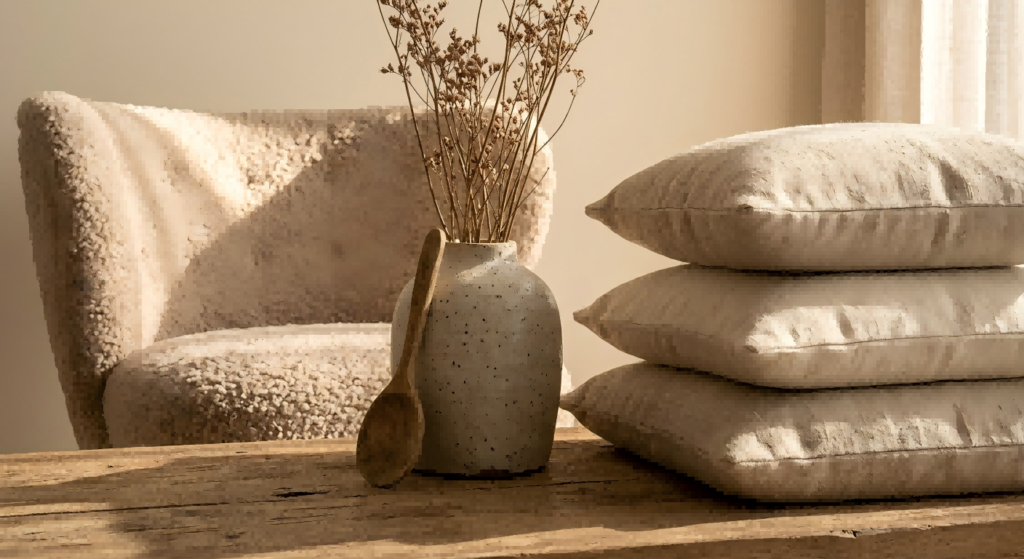
Pick two or three textures and repeat them: a nubby boucle chair, linen pillows, a rough wooden table, a speckled ceramic vase. Keep the colors in one neutral family so the room stays quiet, and let the texture do the work that color would do in a busier room.
If you want an easy place to start, I’d begin with pillow covers. Three in linen or a similar textured fabric can change how a plain sofa looks.
Watch out: boucle is soft but can snag, so check the care label before buying, especially if you have pets.
Worth a look: Linen pillow covers on Amazon
2. Space: Leave It Empty on Purpose
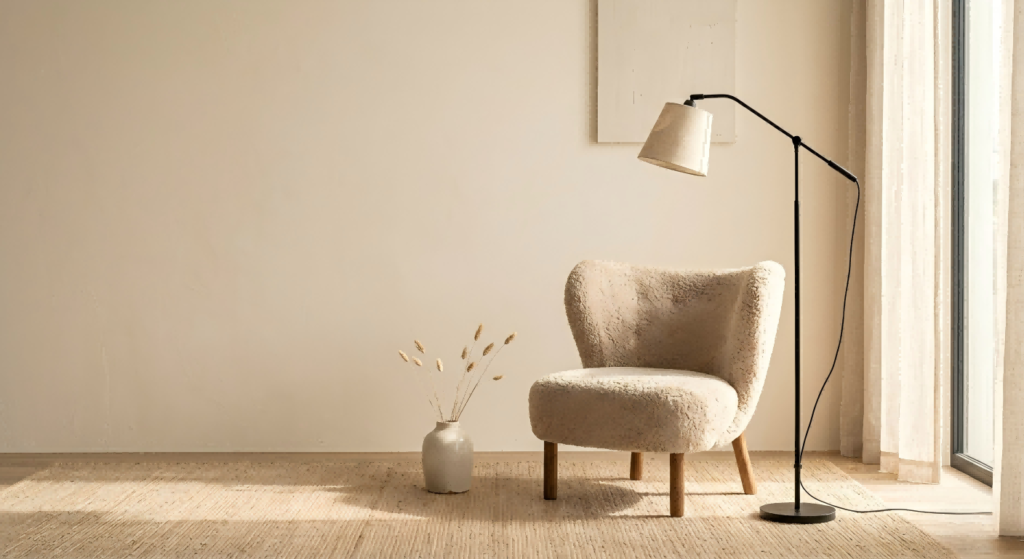
Leaving a corner empty only works when it looks chosen. An empty corner can feel like peace or like something is missing, and the difference is whether the things around it have a job.
In the corner below, there’s one chair to sit in, one lamp to read by, and one vase. That’s all. Everything there is either useful or something nice to look at, and I think that’s a good rule for the whole room: if an object is neither, it can go.
One more practical point: group your pieces together and leave the rest open. Spreading a few things evenly around a room usually makes it look sparse, while a small cluster with open floor around it looks deliberate.
3. Light: Warm It Up and Layer It
Look at that same corner again after dark.
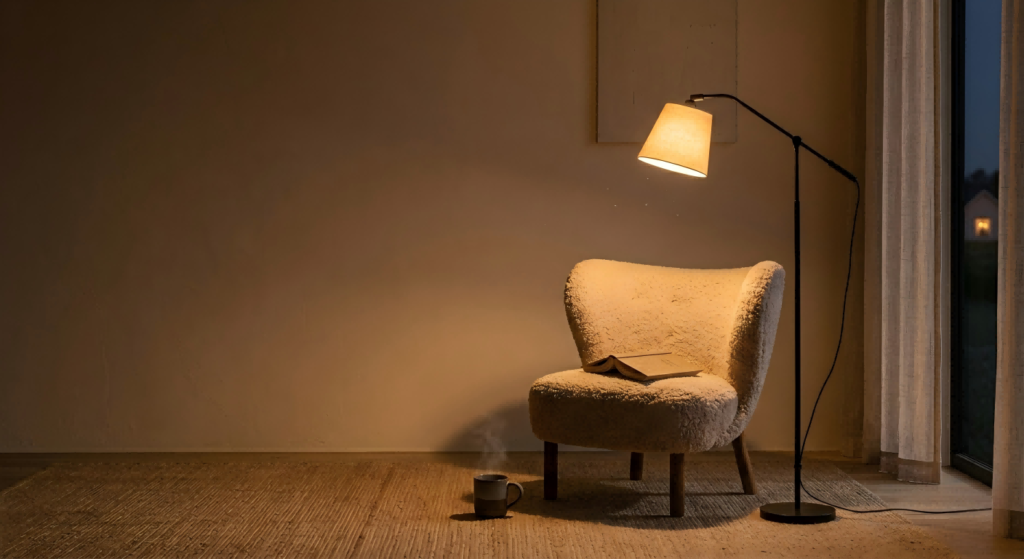
Same chair, same lamp, same rug. The only thing that changed is the light, and it’s the biggest reason a minimalist room can feel like a sanctuary instead of a museum.
Three things help:
- Don’t rely on the overhead light. If you can, use it only when you need it bright, or put it on a dimmer.
- Layer lamps at different heights. A floor lamp in a corner and a table lamp on a side table is a good start.
- Check the bulb. Bulbs labeled “warm white” or “soft white” (around 2700K to 3000K) give a golden light. “Daylight” bulbs look cold in a living room.
Watch out: keep the floor lamp’s cord out of the walkway, and check the lamp’s maximum wattage label before choosing a bulb.
Worth a look: Arc floor lamp on Amazon · Warm white 2700K bulbs on Amazon
Put It Together
You don’t need all three. Start with whichever one your room fails most: if it feels flat, start with Texture. If it feels sparse in a random way, fix the Space. If it feels harsh in the evening, change the Light.
A minimalist room doesn’t have to give up warmth. It only needs to choose its few things more carefully.
As an Amazon Associate, I earn from qualifying purchases.