
How to Make a Small Bedroom Feel Bigger: 4 Changes Using the Eye Test
This post contains Amazon affiliate links. If you buy through them, I may earn a small commission at no extra cost to you.
A small bedroom usually doesn’t feel small because of its square footage. It feels small because your eye keeps getting stopped: by a tall headboard, a dark rug, a nightstand that eats up the floor.
A room doesn’t need less personality to feel more spacious. It needs less visual weight.
In my guide to making a small room feel bigger, I use a simple Eye Test with three questions: Is there enough Light? Are the Lines clear? Does anything look too heavy, or carry too much Weight? A bedroom is a great place to try it, because the biggest piece in the room, the bed, is also the heaviest thing your eye lands on.
Here are four changes, each tied to one of those questions.
1. Light: Put a Mirror Where the Window Light Can Reach It
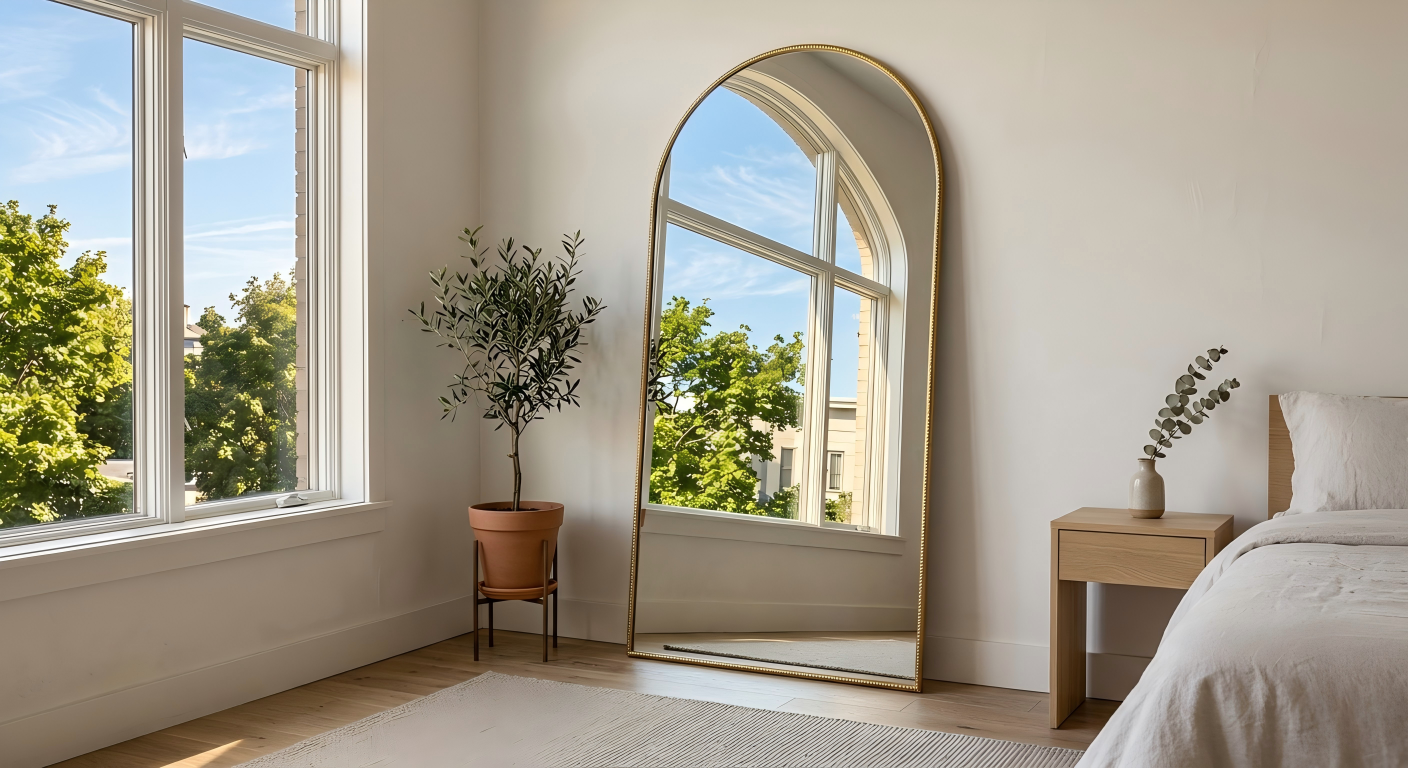
A mirror only helps if it has light to bounce. To find the right spot, stand by the window and look at where the daylight lands on the walls. A full-length mirror placed there will carry that light farther into the room.
A leaning floor mirror works well if you rent and don’t want to drill. Choose a slim frame, because a thick or ornate one adds visual weight, which works against what you’re trying to do.
Watch out: check what the mirror reflects. If it faces a pile of clutter, you’ve just doubled the clutter.
Worth a Look
2. Weight: Choose a Lower, Lighter Bed
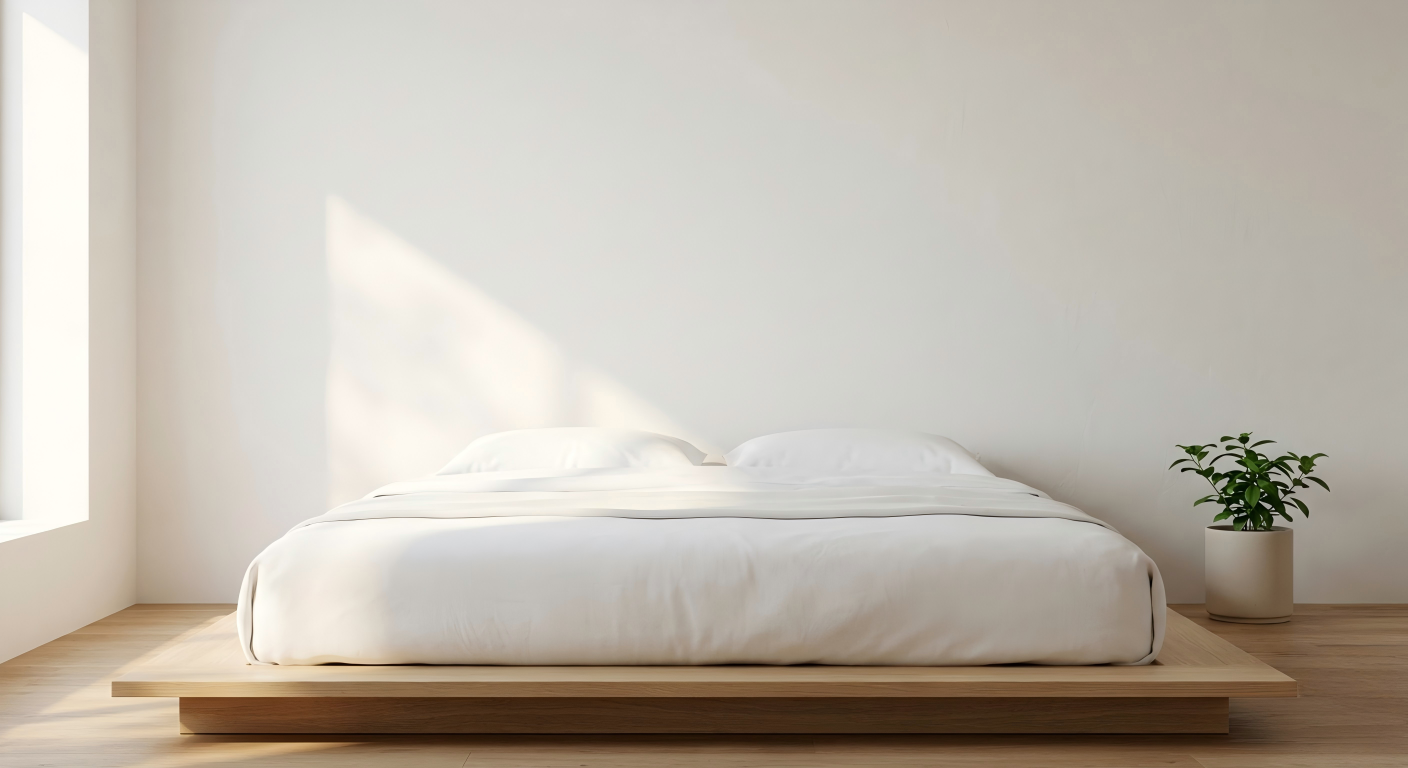
A tall headboard and a heavy footboard can act like walls inside the room. A low platform bed with a simple or open headboard leaves more wall visible above it, so the room reads as taller and less crowded.
If you’re not ready to replace your bed, a smaller step helps too: remove the footboard, or swap a bulky headboard for a slimmer one.
3. Weight: Lighten the Floor with the Right Rug
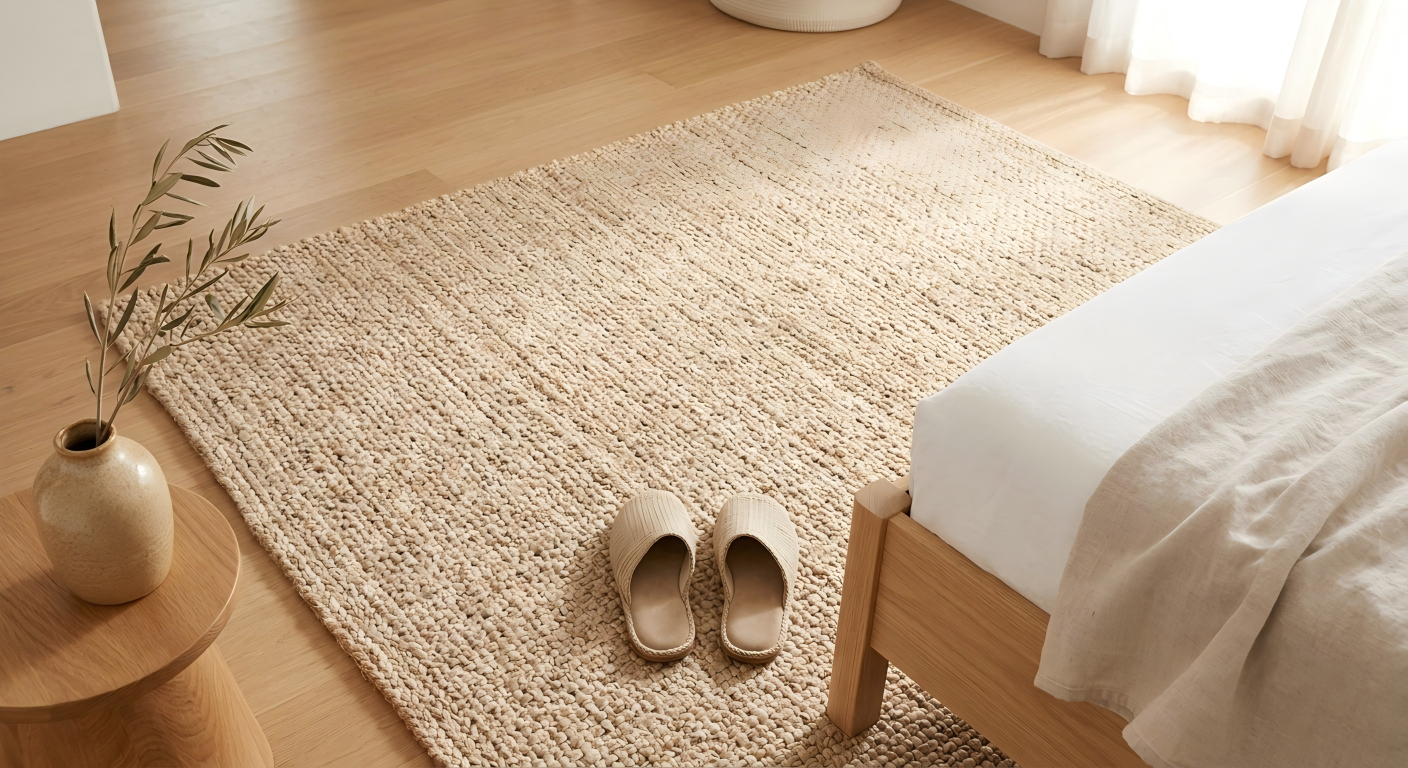
A dark or heavily textured rug can make the floor feel visually heavier, especially in a small bedroom. A lighter, flatter rug in a wheat or oatmeal tone lifts the whole base of the room.
Natural fibers like jute look great, but pure jute can feel rough underfoot. If you’ll be stepping onto it barefoot, look for a jute-cotton blend or a finer weave. Also leave a strip of bare floor around the edges, so the room still shows its full footprint.
Worth a Look
4. Lines: Let Your Eye See More Floor
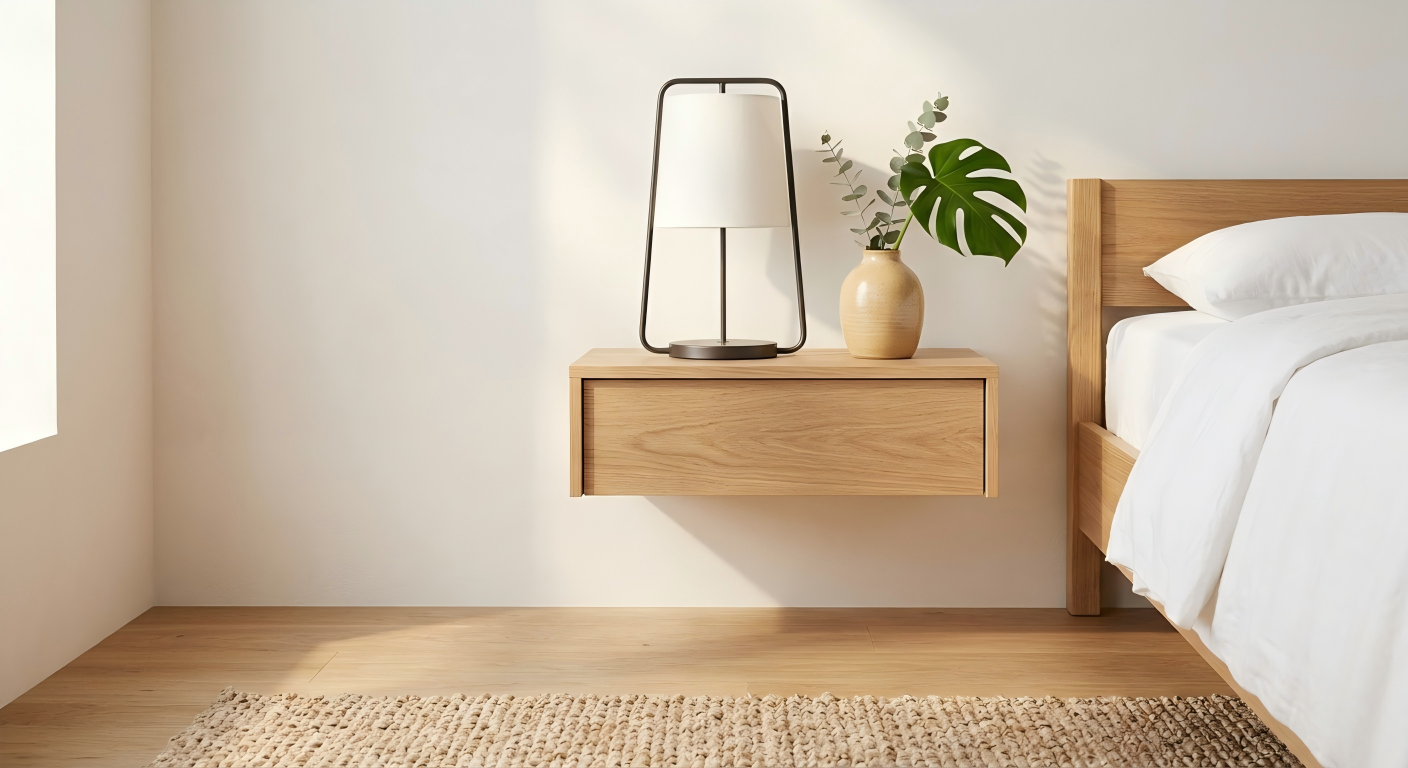
The more uninterrupted floor you can see from the doorway, the bigger the room feels. Wall-mounted nightstands free up that floor and keep the line under the bed clear. Keep the top simple: a lamp, a book, one small vase.
Watch out: make sure wall-mounted nightstands are securely anchored with hardware suited to your wall type. Where appropriate, attach them to wall studs, and always follow the manufacturer’s installation instructions. If you rent, check whether drilling into the walls is allowed first.
Worth a Look
A Quick Tweak for Warm Months
When it gets hot, I’d swap heavy bedding for light linen or cotton in pale colors. It’s the same Eye Test again: lighter fabric, less weight.
Put It Together
You don’t need all four changes. Start with the Eye Test question your bedroom fails most: a dim room needs Light (the mirror), a heavy-looking room needs lower Weight (the bed or rug), and a cluttered floor needs clearer Lines (wall-mounted nightstands).
Once you’ve fixed that one thing, look at the room again from the doorway. Often that’s enough to make it feel more open, without removing the things that make it yours.
As an Amazon Associate, I earn from qualifying purchases.