
How to Use Vertical Space in a Small Home: 7 Overlooked Wall Spots
Start With the Wall, Not Another Piece of Furniture
Small rooms often need better use of their walls, not more storage furniture.
Before you add another shelf or cabinet that eats up floor space, look at what your furniture leaves unused: a doorway, a narrow strip beside a window, the wall above a desk. This guide shows you how to find those spots and which ones are worth using.
One note on scope: this article is about turning wall space into usable space. If your real problem is too much stuff and no system for it, see my guide to Home Organization. And if you’re still deciding where your furniture goes, start with my guide to How to Arrange Furniture in a Small Space.
The Wall Audit: Find Space You Didn’t Know You Had
A wall audit takes about ten minutes. Walk through your home with your phone and photograph the walls you rarely think about.
Step 1: Find the overlooked spots. Look above and behind doors, beside windows, near the bed, next to the couch, above the desk, and in narrow gaps beside furniture. The next section covers each one.
Step 2: Ask three questions about each spot.
| Question | Why it matters |
|---|---|
| Reachable? Can you use it comfortably every day? | Tells you whether the spot suits everyday items or things you rarely need. |
| Clear? Will it stay out of the way of doors, windows, and walking? | Keeps storage from blocking movement or getting in the way of daily life. |
| Secure? Can the wall and the mounting method safely hold what you plan to put there? | Depends on the wall type, the fasteners, the product’s limits, and the real weight of your things. |
A spot is worth using only when it’s easy to reach, stays out of the way, and can safely support what you plan to store there. If a spot fails one of these checks, rethink the location, choose a different kind of storage, or leave it empty.
Step 3: Pick one or two spots. This is the most important step. Don’t turn every empty wall into storage. Start with the spot that would help you most, and see how the room feels before adding more.
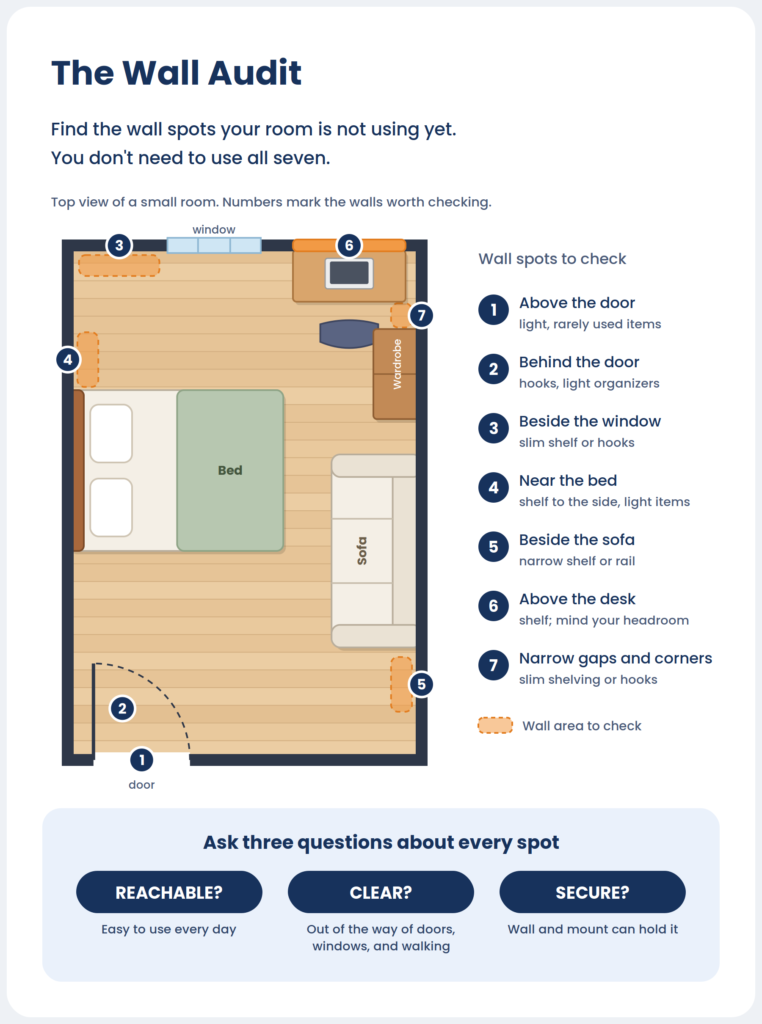
A wall audit isn’t about finding more things to buy. It’s about finding the few places worth using.
7 Wall Spots Worth Checking
You won’t need all seven. Pick the two that fit your room.
1. Above the Door
The space above a doorway is almost always empty. A slim shelf up there can hold light things you rarely need, like seasonal decor or spare linens in soft bags.
Watch out: It’s hard to reach, so keep it for things you don’t need often, and only for items that won’t hurt anyone if they fall. Check how the wall is built before mounting anything.
2. Behind the Door
The back of a door works well for hooks or a light hanging organizer, especially in bedrooms and entryways. Think bags, scarves, or a robe.
Watch out: Check the product instructions and make sure your door is suitable before adding weight. Avoid overloading it, and avoid any organizer that keeps the door from opening and closing properly.
3. Beside the Window
The narrow strip of wall beside a window is usually too small for furniture, but a slim shelf or a couple of hooks fits fine. It’s a good spot for a small plant, a lamp, or a basket you reach for often.
Watch out: Keep curtains, blinds, and the window itself free to open and close, and don’t block daylight.
4. Near the Bed
A shelf beside the bed can hold a book, a glass of water, and a small lamp. In a tight room, it can replace the nightstand altogether.
Watch out: Don’t put heavy or hard objects on a shelf directly above your pillow. Mount shelves off to the side, and keep them for light, stable items. Anything that could fall on someone sleeping doesn’t belong there.
5. Next to the Couch
Bare wall beside the couch? A narrow shelf or a short rail can hold a remote, a book, or a plant. That’s one less side table on the floor.
Watch out: Keep it clear of heads and shoulders when someone sits down or stands up, and don’t narrow the path to the couch.
6. Above the Desk
The floor and the desktop are usually full already, which makes the wall above the desk one of the most useful spots in a small home. A shelf here can hold files, books, or a small plant.
Watch out: Leave enough headroom to sit up straight. Keep heavier things lower, and make sure the shelf is firmly mounted for what it holds.
7. Narrow Corners and the Gaps Beside Furniture
A narrow gap beside a dresser or an empty corner may have room for slim shelving or a few hooks. At home, I put a corner shelf with built-in lights on one corner wall, and it holds my favorite blind box figures. It’s decoration more than storage, but it puts a corner to work and shows off the things I love.
Watch out: A decorative corner shelf is for light things, so check its weight limit before you load it up. Corners also sit right where people walk, so keep it clear of heads and hips, and don’t let it stick out into a walkway.
Choose the Right Storage for the Wall
Once you’ve found a good spot, pick the storage that fits it. Each option has a trade-off.
| Option | Good for | Main limits |
|---|---|---|
| Floating shelves | Books, decor, everyday small items | Need a secure mounting method and must stay within the product’s limits |
| Wall-mounted cabinets | Hiding items, reducing visual clutter | Heavier, so mounting needs more care |
| Tall bookcases or shelving units | Lots of vertical storage in one spot | Still use some floor space, and tall pieces should be anchored to the wall |
| Hooks and hanging rails | Bags, coats, tools, light everyday items | Limited capacity; the product’s weight limit matters |
Start with what you need to store, then choose storage that fits the wall. A few hooks may be enough for everyday bags. Books or heavier objects need a suitable shelf and mounting method.
A friend of mine, Jenny, keeps her broom, mop, and dustpan on a pegboard next to the laundry sink on her balcony. They stay off the floor, and everything has a place. If you hang something heavy, like a stick vacuum, check that the mount is rated for the weight.
A tall bookcase isn’t strictly wall storage, since it still takes floor space. It makes sense when you need a lot of storage and can’t mount things on the wall, but it does eat into your layout.
Make It Safe and Renter-Friendly
Safety first
- Follow the product instructions for fasteners and weight limits when mounting shelves, cabinets, or hooks. Don’t assume a wall that feels solid can hold anything.
- Anchor tall freestanding furniture, such as bookcases and dressers, to the wall. The U.S. Consumer Product Safety Commission recommends this through its Anchor It! campaign, which also explains how to install an anti-tip kit. Take extra care in homes with young children, and think about pets too.
- Keep heavier items on lower shelves.
- If you’re not sure what your wall is made of, or whether a mount is secure, ask a professional or choose an option that doesn’t need to be fixed to the wall.
For renters
- Read your lease before you drill or make any changes to the walls.
- Adhesive hooks, tension rods, and freestanding narrow shelves can work without drilling, but each has its own weight limit and conditions of use, so check the packaging.
- Adhesive products can sometimes damage paint or wallpaper, so test in a hidden spot first.
Keep the Room Feeling Open
A wall full of shelves can feel as crowded as a floor full of furniture. A few things help:
- Give each wall a job, and let some jobs be simple. A friend of mine turned one wall into a mosaic of family photos, built from LEGO bricks. It stores nothing, and the wall still earns its place.
- Keep everyday things within reach. If you need a stool to get to it, it’s not an everyday spot.
- Leave some wall empty. Blank space helps a room feel bigger.
Before you buy anything, run through this quick check:
- Am I really short on storage, or do I just have too much stuff?
- Which one or two wall spots would help most?
- Will it get in the way of doors, windows, or walking?
- Could my existing furniture solve this instead?